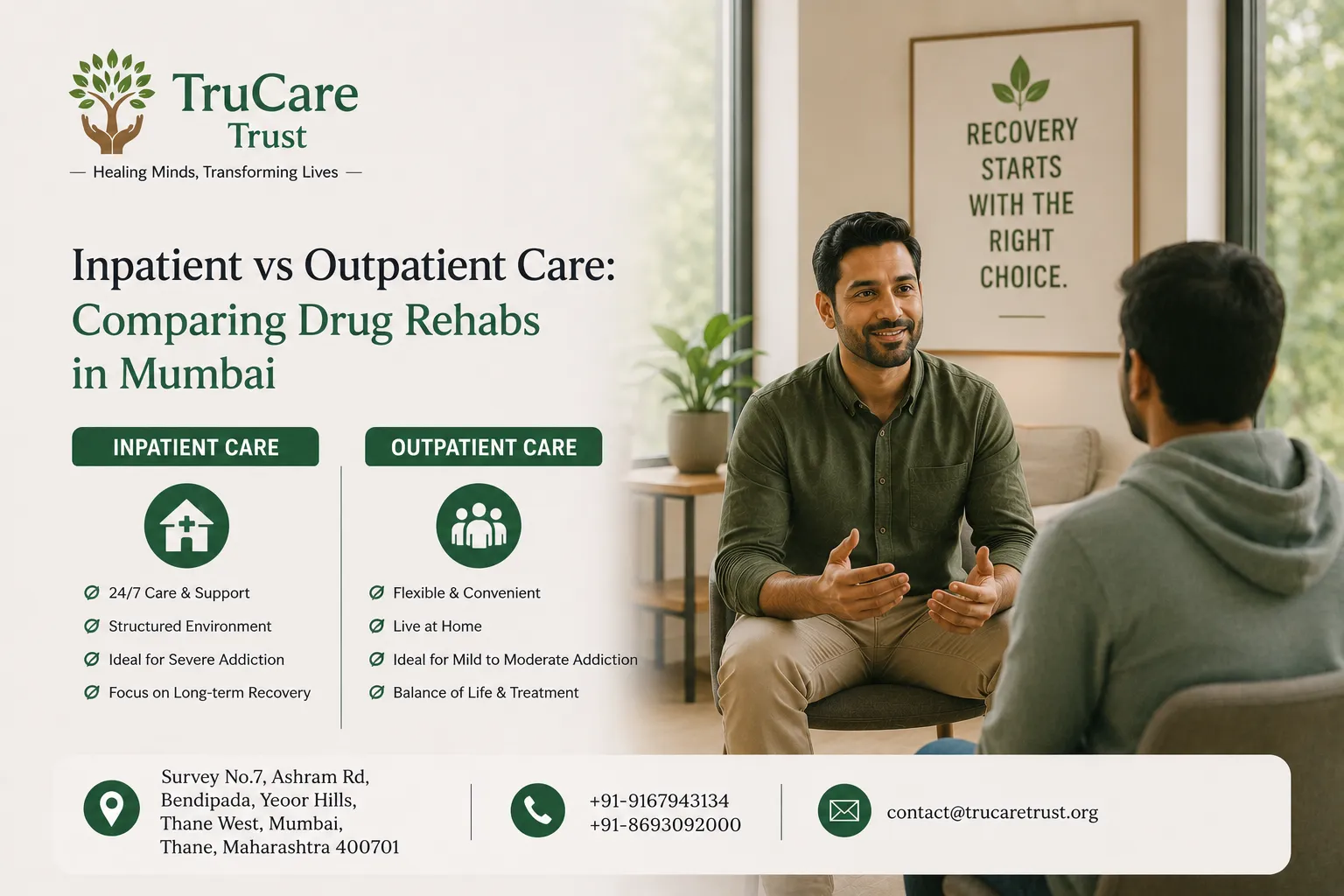
When someone needs help for drug dependence, families often ask whether treatment should happen at home or through a residential stay. There is no single answer. The right setting depends on the substance involved, withdrawal risk, medical and mental-health needs, home environment, earlier treatment attempts and available support.
Inpatient and outpatient care offer different levels of structure. Inpatient care involves staying at the treatment setting. Outpatient care allows a person to attend appointments, therapy or medical reviews while living at home.
Inpatient care may be considered when the person needs close observation, has a history of severe withdrawal, is using more than one substance, has repeatedly returned to use after earlier attempts, or does not have a safe and stable home environment. It can also give someone distance from people, places and routines strongly connected with substance use.
The early days of a residential stay can be hard. The person may feel restless, tired, angry or uncertain about being away from home. A structured routine can help. Regular meals, rest, counselling, group work and supervised activities may give the day a steadier rhythm. The purpose is not to isolate someone from life forever. It is to create a safer period in which they can begin treatment without immediate access to old triggers.
Outpatient care may suit a person who is medically stable, has reliable support at home and can attend sessions consistently. It can be practical for someone who needs to continue work, education or family responsibilities. However, it requires planning. The person returns each day to the same pressures and opportunities to use substances, so attendance, family support and relapse-prevention work become especially important.
When evaluating drug rehabs in Mumbai, families should ask how the decision between inpatient and outpatient care is made. A good answer should include assessment, not assumptions. The provider should ask about the substance used, frequency of use, previous withdrawal symptoms, medicines, physical health, sleep, anxiety, depression and safety concerns.
Neither option should be reduced to accommodation alone. A room and meals do not make treatment effective. The programme should explain what happens after the first few days. Does the person receive individual counselling? Are family sessions available? Is there support for cravings, sleep, conflict and return to routine? What happens if the person becomes distressed or needs a higher level of care?
Family involvement can be valuable in both models. Relatives may need help understanding boundaries, avoiding repeated arguments and responding without covering up harmful consequences. The aim is not to blame the family. It is to make the home environment less confusing after treatment begins.
Before choosing between drug rehabs in Mumbai, ask about aftercare. Discharge from inpatient treatment or completion of outpatient sessions is not the end of recovery. Follow-up counselling, medical reviews, peer support and a plan for difficult days can help the person remain connected to care.
A person may need to change levels of support over time. Someone who begins with outpatient care may later need a more structured setting. Another person may step down from residential treatment to regular counselling. The most suitable choice is the one that takes safety seriously and fits the person’s real circumstances, rather than the one that simply sounds more intensive.
Disclaimer: This article is for general educational purposes only. It does not provide medical advice, diagnosis, treatment, or emergency guidance. Addiction, withdrawal, mental-health concerns, and recovery needs can vary from person to person. A qualified medical professional or addiction-treatment specialist should assess individual needs. In case of severe withdrawal symptoms, overdose, seizures, confusion, self-harm risk, violence, breathing difficulty, or any immediate medical emergency, seek urgent medical assistance.